








Category: E-Commerce

E-Commerce

  • Role of Search Engines in eCommerce

    Role of Search Engines in eCommerce

    In the dynamic world of eCommerce, the role of search engines cannot be overstated. These powerful tools not only facilitate product discovery but also drive conversions and enhance the overall shopping experience for consumers. In this article, we’ll explore the importance of search engines in eCommerce and delve into some popular platforms like Algolia, EasticSearch, Sensefuel, Tweakwise, and Instant Search that are revolutionizing the way businesses optimize their online presence.

    Why Search Engines are Essential in eCommerce:

    Enhanced Discoverability: Search engines empower consumers to find products quickly and efficiently by typing in keywords or phrases relevant to their needs. This enables businesses to showcase their offerings to a broader audience, increasing visibility and potential sales.

    Personalized Recommendations: Advanced search engines leverage machine learning algorithms to analyze user behavior and preferences, providing personalized product recommendations based on past interactions. This personalized approach enhances the shopping experience and fosters customer loyalty.

    Improved Navigation: In addition to traditional keyword-based search, modern search engines offer advanced filtering and sorting options that allow users to refine their search results based on various attributes such as price, brand, size, color, and more. This streamlined navigation simplifies the shopping journey and increases the likelihood of conversion.

    Optimized User Experience: A seamless search experience is crucial for keeping users engaged and satisfied. Search engines like Algolia, EasticSearch, Sensefuel, and Tweakwise prioritize user experience by delivering fast and accurate search results, minimizing latency, and ensuring compatibility across devices and platforms.

    Exploring Leading Search Engine Solutions:

    Algolia:

    • Algolia is a leading provider of search and discovery solutions known for its speed, relevance, and scalability.
    • Its AI-powered search capabilities deliver fast and accurate search results, ensuring a seamless user experience across web and mobile platforms.

    ElasticSearch:

    • ElasticSearch is an open-source search engine renowned for its real-time search and analytics capabilities.
    • Widely adopted by eCommerce businesses, ElasticSearch powers advanced search functionalities, faceted navigation, and personalized recommendations.

    Sensefuel:

    • Sensefuel specializes in providing search and navigation solutions tailored for eCommerce websites.
    • Its advanced features include autocomplete suggestions, dynamic filtering, and AI-driven recommendations, helping businesses optimize product discovery and increase sales.

    Tweakwise:

    • Tweakwise offers intelligent search and merchandising solutions designed to enhance the eCommerce shopping experience.
    • By leveraging AI algorithms and real-time analytics, Tweakwise delivers personalized search results, dynamic merchandising strategies, and targeted promotions, driving conversions and revenue growth.

    Instant Search:

    • Instant Search is a powerful search solution that provides instant, predictive search results with lightning-fast speed.
    • Its intuitive interface and seamless integration capabilities make it an ideal choice for eCommerce businesses looking to optimize search performance and enhance user experience.

    In the competitive world of eCommerce, search engines are essential catalysts for success, driving discoverability, engagement, and conversion. Whether it’s leveraging industry giants like Google and Amazon or specialized solutions like Algolia, ElasticSearch, Sensefuel, Tweakwise, and Instant Search, businesses can drive engagement, boost conversions, and stay ahead of the competition in today’s digital marketplace.

    Infocus Software Solutions offers solutions to implement search engines on your eCommerce store. Let’s connect to explore how it can benefit your business.


  • The Importance of Upholding Brand Values in E-commerce

    The Importance of Upholding Brand Values in E-commerce

    In the digital landscape of e-commerce, where competition is fierce and consumer choices abound, the significance of brand values cannot be overstated. A brand’s values serve as its guiding principles, shaping its identity, influencing consumer perceptions, and ultimately determining its success in the market. In this article, we explore into why upholding brand values is paramount in the domain of e-commerce.

    Establishing Brand Identity and Trust: Brand values are the foundation upon which a brand’s identity is built. They encapsulate the beliefs, principles, and ethics that define what the brand stands for. In e-commerce, where interactions are primarily digital, establishing a strong brand identity is essential for building trust with consumers. Consistently upholding brand values helps establish authenticity and credibility, fostering trust and loyalty among customers.

    Differentiation in a Crowded Marketplace: In a crowded marketplace teeming with countless options, brand values serve as a distinguishing factor. They set a brand apart from its competitors and give consumers a reason to choose one brand over another. By aligning with consumers’ values and beliefs, brands can forge deeper connections and stand out in the minds of consumers, driving brand preference and loyalty.

    Influencing Consumer Behavior: Brand values have a profound impact on consumer behavior in e-commerce. Today’s consumers are increasingly conscious of the values and ethics espoused by the brands they support. They are more likely to patronize brands that share their values and demonstrate a commitment to social responsibility, sustainability, and ethical business practices. By upholding brand values, e-commerce businesses can attract and retain customers who resonate with their ethos, leading to increased customer engagement and loyalty.

    Mitigating Reputation Risks: In the digital age, where information travels at the speed of light, reputation is everything. A single misstep or deviation from brand values can have far-reaching consequences, tarnishing a brand’s reputation and eroding consumer trust. E-commerce businesses must be vigilant in monitoring their online presence and swiftly address any issues that may arise. By consistently upholding brand values and demonstrating integrity and transparency, businesses can mitigate reputation risks and maintain the trust of their customers.

    Driving Long-Term Success: Ultimately, the importance of upholding brand values in e-commerce extends beyond immediate gains. Brands that prioritize integrity, authenticity, and consistency in their actions cultivate strong emotional connections with their customers, laying the groundwork for long-term success and sustainability. By staying true to their values and delivering on their promises, e-commerce businesses can build enduring relationships with customers, foster brand advocacy, and secure their position in the competitive e-commerce landscape.

    In conclusion, upholding brand values is not just a moral imperative but a strategic necessity in e-commerce. Brands that embody their values authentically and consistently stand to gain the trust, loyalty, and support of today’s discerning consumers. In a digital world where reputation is paramount, the importance of upholding brand values cannot be overstated.

    Infocus Software Solutions always takes all the above parameters into consideration and works with businesses to keep the brand value intact

  • Empowering E-commerce: The Vital Role of Software Service Providers at Fiscal Year-End

    Empowering E-commerce: The Vital Role of Software Service Providers at Fiscal Year-End

    In the fast-paced world of e-commerce, fiscal year-end is a critical period for businesses to evaluate their financial standing, assess performance, and strategize for the future. Software service providers play a crucial role during this time, providing essential support and expertise to e-commerce service providers. Let’s explore the key responsibilities and contributions of these software service firms during the fiscal year-end period.

    1. Financial Analysis and Reporting: Infocus Software Solutions excels in providing comprehensive financial analysis and reporting services to e-commerce service providers. Leveraging cutting-edge analytical tools and deep industry knowledge, our team meticulously examines financial data, identifies trends, and generates insightful reports. By offering a clear understanding of financial performance, we empower e-commerce businesses to make informed decisions and optimize their fiscal strategies.
    2. Auditing and Compliance: Ensuring compliance with regulatory standards and navigating complex fiscal regulations are paramount for e-commerce service providers. Infocus Software Solutions acts as a trusted advisor, guiding businesses through the complexities of compliance requirements. Through meticulous audits, thorough reviews of financial statements, and adherence to tax laws, we mitigate risks and ensure that our clients operate within legal parameters, safeguarding their reputation and financial well-being.
    3. Performance Evaluation and Optimization: Evaluating the performance of e-commerce platforms and services is essential for identifying strengths, weaknesses, and areas for improvement. Infocus Software Solutions utilizes its technical proficiency to assess platform performance, user experience, and operational efficiency. They provide recommendations for optimization and enhancement to drive business growth and competitiveness.
    4. Technology Upgrades and Maintenance: In today’s digital landscape, technology optimization and security enhancement are paramount for e-commerce businesses. Infocus Software Solutions specializes in implementing advanced technological solutions, upgrading software systems, and fortifying cybersecurity measures. By ensuring the seamless functioning of e-commerce platforms and protecting against cyber threats, we bolster the operational resilience and reputation of our clients, instilling confidence among their customers and stakeholders.
    5. Strategic Planning and Innovation: At Infocus Software Solutions, we recognize the importance of strategic planning and future readiness for e-commerce businesses. As the fiscal year-end approaches, we collaborate closely with our clients to develop forward-thinking strategies that drive growth and sustainability. Our team offers invaluable insights, technology roadmaps, and innovative solutions tailored to the unique challenges and opportunities faced by e-commerce service providers, positioning them for long-term success.
    6. Customer Support and Satisfaction: Exceptional customer support is the foundation of success in the e-commerce industry. Infocus Software Solutions is committed to delivering unparalleled support services, resolving technical issues, and ensuring a seamless customer experience. Through responsive communication channels, proactive problem-solving, and personalized assistance, we strive to enhance customer satisfaction and loyalty, driving sustained growth and profitability for our clients.

    In conclusion, Infocus Software Solutions and similar software service companies play a pivotal role in supporting e-commerce service providers during the fiscal year-end period. From financial analysis and compliance assurance to strategic planning and customer-centric support, these firms offer a comprehensive suite of services tailored to the specific needs of e-commerce businesses. By leveraging our expertise, technology prowess, and unwavering commitment to client success, we empower e-commerce service providers to navigate the complexities of the fiscal year-end with confidence, resilience, and strategic foresight.

  • Enhancing E-commerce Interactivity with Data Science and Machine Learning- Insights

    Enhancing E-commerce Interactivity with Data Science and Machine Learning- Insights

    In today’s digital age, e-commerce success centers on the ability to engage customers effectively. At Infocus Software Solutions, we’re at the forefront of leveraging data science and machine learning to revolutionize customer interactions in the e-commerce domain. Through our analysis, we provide light on how these technologies can transform your online business into a highly interactive platform.

    Data Science Insights: Our data science approach explores deep into customer behavior, preferences, and purchase history. By dissecting vast datasets, we uncover actionable insights that drive targeted marketing strategies and personalized user experiences.

    Machine Learning Advancements: Machine learning algorithms power our e-commerce solutions, continually refining themselves through user interactions. This enables us to deliver real-time product recommendations, dynamic pricing models, and tailored promotions that resonate with individual customers.

    Enhanced Interactivity: By integrating data science and machine learning, we empower e-commerce platforms to engage customers on a whole new level. From predictive analytics to chat-bots offering personalized assistance, our solutions create immersive experiences that keep customers coming back for more.

    Features Improvisation :Utilizing data science, we can enhance the fundamental operational aspects of various features. Broadly, these functionalities encompass Recommendation Systems, Dynamic Pricing Strategies, Supply Chain Optimization, Analysis of Customer Feedback, A/B Testing, Inventory Management, Personalized Marketing Campaigns, and Customer Lifetime Value Prediction.

    Conclusion: Infocus Software Solutions experience and expertise can help to leveraging data science and machine learning in e-commerce. Through our analysis and insights, we showcase the transformative potential of these technologies in making your online business more interactive and engaging for customers.

  • Maximizing Business Success Through Comprehensive Supply Chain Management: Insights from Infocus Software Solutions

    Maximizing Business Success Through Comprehensive Supply Chain Management: Insights from Infocus Software Solutions

    In today’s hyper-competitive eCommerce landscape, the effective management of the supply chain is paramount for businesses to thrive, regardless of their domain—be it B2B, B2C, or D2C. At Infocus Software Solutions, we recognize the pivotal role that supply chain management (SCM) plays in driving operational efficiency, enhancing customer satisfaction, and fostering sustainable growth. In this article, we offer valuable insights into how proper SCM practices, guided by Infocus Software Solutions, can revolutionize various aspects of business across all ecommerce domains.

    Driving Operational Excellence: Efficient operations are the cornerstone of successful ecommerce ventures. Infocus Software Solutions empowers businesses to streamline their operations through comprehensive SCM solutions tailored to their specific needs. By optimizing processes such as order fulfillment, inventory management, and logistics, enterprises can achieve heightened agility, reduced lead times, and enhanced productivity, laying the foundation for sustained success in the competitive marketplace.

    Optimizing Inventory Dynamics: Balancing inventory levels with fluctuating demand is a perpetual challenge in ecommerce. Infocus Software Solutions leverages advanced analytics and predictive algorithms to help businesses optimize their inventory dynamics across diverse ecommerce domains. By accurately forecasting demand, minimizing stock-outs, and maximizing inventory turnover, enterprises can unlock significant cost savings, minimize wastage, and capitalize on revenue opportunities.

    Elevating Customer Experience: In the realm of B2C and D2C ecommerce, delivering exceptional customer experiences is paramount for driving loyalty and repeat business. Infocus Software Solutions enables businesses to exceed customer expectations through seamless order processing, personalized service, and expedited shipping. By harnessing data analytics and customer insights, enterprises can anticipate consumer preferences, address pain points proactively, and cultivate lasting relationships that drive business growth.

    Nurturing Collaborative Partnerships: Strong partnerships with suppliers and vendors are essential for success in B2B ecommerce. Infocus Software Solutions facilitates seamless collaboration between businesses and their supply chain partners, enabling transparent communication, efficient resource allocation, and mutual value creation using API or different medium. By fostering trust and reliability across the supply chain ecosystem, enterprises can mitigate risks, drive innovation, and unlock new avenues for growth and expansion.

    Enabling Supply Chain Visibility: Real-time visibility into supply chain operations is critical for informed decision-making and risk management. Infocus Software Solutions provides businesses with comprehensive visibility across their supply chains, allowing them to track orders, monitor inventory levels, and identify potential bottlenecks or disruptions. With actionable insights at their fingertips, enterprises can proactively address challenges, optimize performance, and enhance operational resilience.

    Expanding Global Reach: Expanding into new markets presents both opportunities and challenges for ecommerce businesses. Infocus Software Solutions can help enterprises with the tools and expertise needed to navigate the complexities of global supply chains seamlessly. From managing cross-border logistics to complying with international regulations, our SCM solutions empower businesses to expand their global reach with confidence, unlocking new growth opportunities and maximizing market penetration.

    Driving Cost Efficiency: Cost optimization is a key driver of profitability and competitiveness in ecommerce. Infocus Software Solutions helps businesses identify cost-saving opportunities, eliminate inefficiencies, and optimize resource utilization throughout the supply chain lifecycle. By leveraging data-driven insights and performance metrics, enterprises can reduce procurement costs, minimize inventory holding expenses, and streamline transportation logistics, ultimately enhancing their bottom line and market position.

    In conclusion, regardless of the ecommerce domain, Infocus Software Solutions is committed to empowering businesses with comprehensive supply chain management solutions that drive operational excellence, enhance customer satisfaction, and fuel sustainable growth. With our expertise and insights, enterprises can navigate the complexities of the modern ecommerce landscape with confidence, unlocking new opportunities and achieving unparalleled success in the digital marketplace. Partner with Infocus Software Solutions today and embark on a journey towards a more efficient, agile, and profitable future in ecommerce.

  • Effective Strategies for B2B to Establish a Rapid E-commerce Presence

    Effective Strategies for B2B to Establish a Rapid E-commerce Presence

    In the ever-changing landscape of e-commerce,B2B enterprises encounter the challenge of establishing their presence swiftly and effectively. At Infocus Software Solutions, we recognize the necessity of a strategic approach to make a significant impact within a short time-frame. Below, we present our recommended strategies for B2B enterprises looking to swiftly make their mark in the e-commerce domain:

    Clarify Objectives and Define Target Audience: Begin by articulating your goals and pinpointing your target demographic. Understanding the specific needs and preferences of your audience enables you to tailor your approach and offerings accordingly.

    Utilize E-commerce Platforms and Marketplaces: Leverage established e-commerce platforms and marketplaces to swiftly access a broad audience of potential clients. There are Platforms which offer robust infrastructure and pre-existing audiences, facilitating the rapid establishment of your online presence.

    Foster Thought Leadership Through Content Marketing: Establishing thought leadership via content marketing is pivotal for building credibility and trust with your audience. Produce high-quality content such as blog posts, whitepapers, case studies, and industry reports to position your brand as an authority in your niche.

    Enhance Search Engine Visibility Through Optimization: Implement effective search engine optimization (SEO) strategies to ensure your e-commerce website ranks favorably in search engine results. By optimizing your website’s content, metadata, and structure, you can enhance visibility and attract organic traffic.

    Embrace Paid Advertising and Retargeting: Invest in paid advertising across platforms like Google Ads and social media to rapidly expand visibility and reach your target audience. Additionally, employ retargeting campaigns to re-engage visitors who have expressed interest in your offerings.

    Prioritize Customer Experience and Relationship Building: Deliver exceptional customer experiences to differentiate your brand and cultivate enduring relationships. Provide personalized support, seamless purchasing experiences, and post-sale services to foster customer loyalty and drive repeat business.

    Monitor Performance and Iterate for Continuous Improvement: Continuously monitor key performance metrics to evaluate the effectiveness of your e-commerce strategies. By analyzing metrics such as website traffic, conversion rates, and customer acquisition costs, you can identify areas for enhancement and refine your approach accordingly.

    By implementing these strategies strategically and cohesively, B2B enterprises can swiftly establish a robust presence in the e-commerce sphere, driving growth and success in their online endeavors. Partner with Infocus Software Solutions to expedite your journey into the e-commerce domain and realize your business objectives.

  • Enhancing Retail Efficiency: Implementing Store-Specific Order Placement for Multi-Store eCommerce Operations

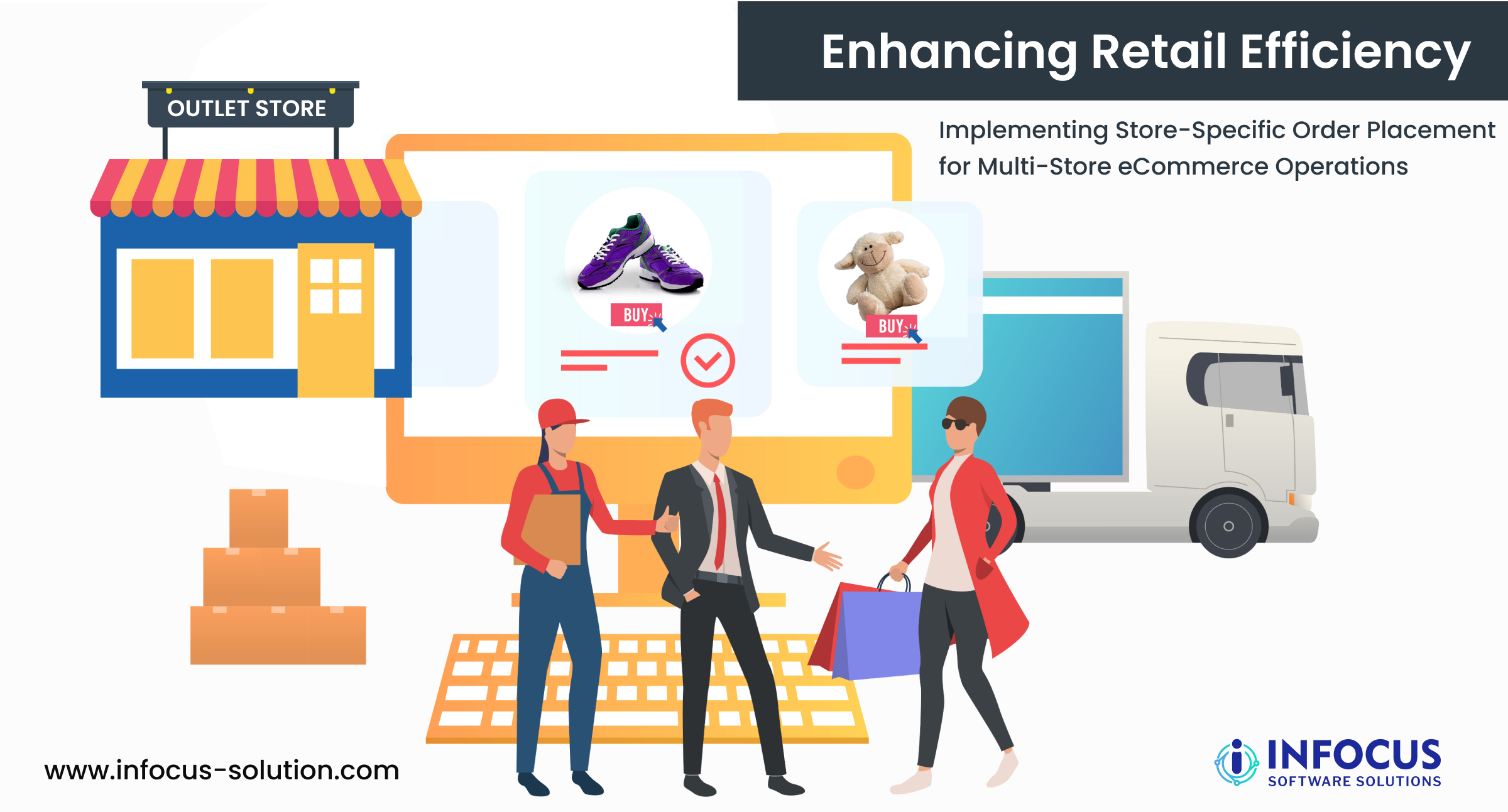
    Enhancing Retail Efficiency: Implementing Store-Specific Order Placement for Multi-Store eCommerce Operations

    In the dynamic world of retail, where the intersection of online and physical stores is increasingly crucial, optimizing operations is paramount. For businesses with multiple physical locations and an online presence, streamlining inventory management and order fulfillment processes can be a game-changer.

    The Challenge:
    Imagine a retail client with over 60 stores scattered across the country, Navigating the challenges of managing inventory for order fulfillment across both physical and digital storefronts. Despite leveraging Magento’s Multi-Source Inventory (MSI) feature, the client encountered hurdles in efficiently fulfilling orders. The culprit? The distribution of products across various stores, sometimes located far apart, can pose a logistical nightmare.

    Addressing this challenge required a systematic approach:

    Shipping Method Selection: Customers were prompted to choose between home delivery or click-and-collect.
    Location Confirmation: Upon selecting the shipping method, customers provided their postal code or granted location access via their browser.
    Store Selection: Leveraging this information, the system displayed nearby stores configured for the chosen shipping method, aiding customers in selecting the most convenient option.
    Dynamic Inventory Display: Once a store and shipping method were chosen, the system dynamically displayed product details and available inventory from that specific store as customers added items to their carts.
    Flexible Cart Management: Anticipating scenarios where customers returned to add more products, the system maintained previously selected locations as defaults, promptly removing out-of-stock items from the cart with clear notifications.
    Adjustable Options: Customers retained the flexibility to modify their chosen store and shipping method at any point before finalizing the order, with the cart automatically adjusting to reflect these changes.
    Streamlined Checkout: The system defaulted to the selected shipment method at the checkout stage, ensuring a seamless and efficient process.

    How Infocus Software Solutions Can Assist:

    At Infocus Software Solutions, we specialize in optimizing processes like store-specific order placement to streamline customer experiences and enhance inventory management. By implementing this solution, your retail business can significantly improve efficiency and customer satisfaction by consolidating orders through a single store.

    In conclusion, in today’s rapidly evolving consumer landscape, staying ahead requires embracing innovative solutions such as store-specific order placement. Through strategic adaptations like these, retailers can not only enhance operational efficiency but also strengthen their competitive edge in the dynamic eCommerce environment.

    Collaborate with us to elevate your retail enterprise. Reach out to Infocus Software Solutions today to explore how our expertise can empower your success in the ever-changing landscape.

  • Doubling down on your competitive advantage as a company

    Doubling down on your competitive advantage as a company

    In our earlier post New Reality of eCommerce, we talked about the fact that it’s important to create an adaptive retail strategy for the new reality companies find themselves in today.

    We listed 5 key areas in which your company can make a difference:

    In this blogpost, we’ll elaborate doubling down on your competitive advantage as a company and how we Infocus Software Solutions can help you as a company.

    This trend is also shown by the graph of McKinsey below,

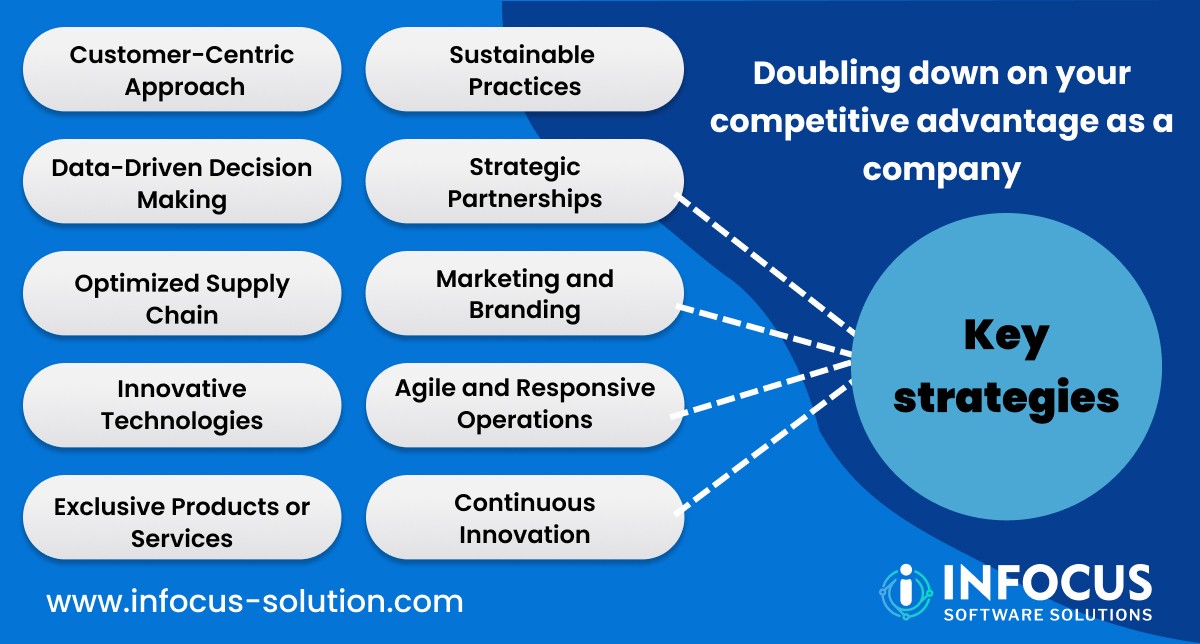
    Doubling down on your competitive advantage in retail eCommerce is crucial for staying ahead in a competitive market. Here are key strategies to reinforce your strengths:

    • Customer-Centric Approach: Prioritize customer experience by offering personalized services, easy navigation, and responsive customer support. Understand and cater to the unique needs and preferences of your target audience.
    • Data-Driven Decision Making: Leverage data analytics to gather insights on customer behavior, purchasing patterns, and market trends. Use this information to make informed decisions and tailor your strategies for maximum impact.
    • Optimized Supply Chain: Streamline your supply chain for efficiency and cost-effectiveness. Implement technologies like RFID, IoT, and automation to enhance inventory management, reduce lead times, and ensure timely deliveries.
    • Innovative Technologies: Embrace emerging technologies such as AI, AR, and VR to enhance the online shopping experience. Implement chatbots for customer support, AR for virtual try-ons, and AI-driven recommendations to boost engagement.
    • Sustainable Practices: Demonstrate a commitment to sustainability by adopting eco-friendly practices in packaging, promoting sustainable products, and communicating your environmental initiatives. This resonates well with socially conscious consumers.
    • Strategic Partnerships: Collaborate with other businesses or influencers to expand your reach and tap into new customer segments. Partnering strategically can provide access to complementary resources and strengthen your brand presence.
    • Marketing and Branding: Invest in compelling marketing strategies to build brand awareness and loyalty. Utilize social media, content marketing, and influencer partnerships to create a strong brand identity and connect with your audience.
    • Agile and Responsive Operations: Stay agile and responsive to market changes. Quickly adapt to consumer preferences, industry trends, and technological advancements to maintain a competitive edge.
    • Exclusive Products or Services: Offer exclusive products or services that set your brand apart. Limited editions, unique collaborations, or proprietary features can create a sense of exclusivity and attract a dedicated customer base.
    • Continuous Innovation: Foster a culture of innovation within your organization. Encourage employees to contribute ideas, experiment with new technologies, and stay ahead of the curve in terms of industry trends

    By emphasizing specific strategies that align with your business, you can strengthen your competitive edge in the retail eCommerce sector and position your company for ongoing success. Continuously review and enhance these chosen approaches to remain adaptable in the constantly changing eCommerce landscape.

    Let’s work together to shape the future of retail. Contact Infocus Software Solutions today and discover how we can help you thrive in the new reality.

  • Increased brand loyalty through personalization and convenience

    Increased brand loyalty through personalization and convenience

    In our earlier post New Reality of eCommerce, we talked about the fact that it’s important to create an adaptive retail strategy for the new reality companies find themselves in today.

    We listed 5 key areas in which your company can make a difference:

    In this blogpost, we’ll elaborate the impact of Brand loyalty through personalization and convenience and how we Infocus Software Solutions can help you as a company.

    Recent studies show that there is an increased importance on Brand seen it is more difficult to correctly target customers nowadays. Not specifically because the technology isn’t capable of doing so, but because it is becoming increasingly expensive in doing so. And also privacy restrictions aren’t exactly making it easier for companies.

    This trend is also shown by the graph of McKinsey below, where they foresee that the growth in Brand marketing spend will surpass the growth in performance marketing.

    Now, what is the best way for you as a company to increase the brand loyalty with your customers?That’s where personalization and convenience come in, because no better way to enhance the customer experience than by serving up your customers with an exceptional experience.

    Below you can find some actionable steps, in order to increase your brand loyalty:

    1. Personalized Communication:
    • Customer Segmentation: Divide your customer base into segments based on demographics, preferences, and behaviors.
    • Targeted Messaging: Tailor marketing messages, emails, and promotions to each segment, providing relevant and personalized content.
    • User-Friendly Website and App Design:
    • Personalized User Interfaces: Implement features like account dashboards, wish lists, and personalized recommendations to enhance the browsing experience.
    • Easy Navigation: Ensure a seamless and intuitive design that makes it simple for customers to find what they need.
    • Convenient Purchase Journey:
    • One-Click Purchasing: Implement one-click checkout options to reduce friction in the buying process.
    • Multiple Payment Options: Offer a variety of payment methods to accommodate customer preferences.
    • Streamlined Customer Support:
    • Personalized Assistance: Train customer support teams to address customers by name and be aware of their purchase history.
    • Omnichannel Support: Provide support across various channels, such as live chat, email, and social media, for convenience.
    • Loyalty Programs and Rewards:
    • Personalized Rewards: Tailor loyalty program rewards based on individual customer preferences and purchase patterns.
    • Exclusive Offers: Provide exclusive discounts, early access to sales, or personalized perks for loyal customers.
    • Feedback and Surveys:
    • Continuous Feedback: Encourage customers to provide feedback on their experiences and use this information to improve personalization and convenience.
    • Survey Personalization: Tailor surveys to gather insights specific to each customer segment.
    • Anticipate Customer Needs:
    • Predictive Analytics: Utilize data to anticipate customer needs and provide proactive solutions.
    • Automated Reordering: For consumable products, offer automated reorder options based on usage patterns.
    • Social Media Engagement:
    • Personalized Social Content: Tailor social media content to match the interests and preferences of different customer segments.
    • Responsive Interaction: Engage with customers through comments, messages, and mentions, addressing queries or feedback promptly.

    By combining personalization and convenience at every touch-point, businesses can create a customer centric approach that fosters brand loyalty over time. Regularly assess customer feedback and adapt strategies to evolving preferences to ensure a lasting connection with your audience.

    Don’t hesitate to contact us to discuss what Infocus Software Solutions can do for you in order to stay on top of the latest technologies & trends.

  • The impact of AI on operational Efficiency

    The impact of AI on operational Efficiency

    In our previous blogpost, we talked about the fact that it’s important to create an adaptive retail strategy for the new reality companies find themselves in today.

    We listed 5 key areas in which your company can make a difference:

    In this blogpost, we’ll elaborate the impact of AI on Operational Efficiency and how we Infocus Software Solutions can help you as a company.

    What will 2024 have in store for us seen 2023 has been the year of the real breakthrough of AI.  The adoption rate of AI has been astonishing, as you can seen in the graph below. Especially compared to the rise of other popular technologies/platforms, you understand that AI will revolutionise the way we work and do business. We ain’t seen nothing yet!

    As with any new technology, the challenge is how to use this new technology as a USP for your company. This is something where we as Infocus Software Solutions can help you with. It is our job and passion to stay on top of all the new trends out there, and to translate these new technologies into new business cases that will help you as a company to grow your business.

    To give you more of a feel on the numerous possibilities of AI, we have highlighted some domains in which the use of Artificial Intelligence can contribute positively.

    Automation of Repetitive Tasks:

    • AI can automate mundane and repetitive tasks, allowing employees to focus on more complex and creative aspects of their work.
    • This can lead to increased efficiency, reduced errors, and cost savings.

    Data Analysis and Insights:

    • AI can process and analyze vast amounts of data quickly, extracting valuable insights that may be challenging for humans to discern.
    • Businesses can use AI to make data-driven decisions, identify trends, and gain a competitive advantage.

    Customer Service and Support:

    • AI-powered chat-bots and virtual assistants can handle routine customer queries, providing instant responses and improving overall customer service.
    • Natural Language Processing (NLP) enables these systems to understand and respond to customer inquiries in a more human-like manner.

    Personalization:

    • AI can analyze customer preferences, behaviors, and historical data to provide personalized recommendations and experiences.
    • This personalization can enhance customer satisfaction and loyalty.

    Supply Chain Optimization:

    • AI can optimize supply chain management by predicting demand, identifying potential disruptions, and streamlining logistics.
    • This helps in reducing costs, improving efficiency, and ensuring timely deliveries.

    Fraud Detection and Security:

    • AI algorithms can detect patterns indicative of fraudulent activities in real-time, enhancing security measures.
    • This is particularly useful in financial transactions and online activities.

    Predictive Analytics:

    • AI models can predict future trends and outcomes based on historical data, helping businesses anticipate market changes and plan accordingly.

    Human Resources and Recruitment:

    • AI can streamline the recruitment process by automating resume screening, identifying suitable candidates, and even conducting initial interviews.
    • It can also assist in workforce management and employee engagement.

    Health and Safety Monitoring:

    • In industries such as manufacturing, AI-powered sensors and cameras can monitor workplace safety, identify potential hazards, and prevent accidents.

    Research and Development:

    • AI can accelerate research and development processes by analyzing vast datasets, identifying potential breakthroughs, and even proposing new ideas.

    Customized Marketing Campaigns:

    • AI can analyze customer behavior and preferences to create targeted and personalized marketing campaigns, improving the effectiveness of promotional efforts.

    Learning and Development:

    • AI can facilitate employee training through personalized learning paths, adaptive modules, and simulations, enhancing skill development.

    As an illustration of the above, you can find in the graph below where AI today already can help you as a Fashion Retailer. This specific analysis has been done by McKinsey.

    Don’t hesitate to contact us to discuss what Infocus Software Solutions can do for you in order to stay on top of the latest technologies & trends.